

A Coaching Paradigm


Philosophical roots
I became a bit of a philosophy nerd not long after my grandad died. I was 15 and his philosophy books appeared on my parents’ bookshelves. I started leafing through them and was ensnared by the possibility of facing up to life’s big questions.
It wasn’t until ten years later, though, that philosophy came fully alive for me. I’d returned to university and I was attempting to work out what I really believed, philosophically. I aimed some of Nietzsche’s critiques at my own ethical stances and it was like a power hose blasting fresh water, washing away lazy assumptions.
I found that I couldn’t justify my own stances. I’d thought of myself as a profoundly ethical person. My ethical beliefs underlay everything I did. Yet I couldn’t prove to myself why it made sense to hold those beliefs. I felt as if I’d woken up to find that there was no ground beneath my feet.
That evening propelled me on a long voyage of exploration where I sought out every perspective I could find on what it meant to live well. I had day jobs, of course. I ran an outdoor education centre. I led 23-day personal development courses in the Colorado Rockies. I ran team and leader development programmes. Then I began working as a coach.
The lack of a paradigm
I soon saw the connections between the coaching process and my philosophical explorations, for I was stuck by the potential of coaching to help people live well. Coaching enables people to live in accordance with their values and deepest hopes — in both their personal and professional lives. It helps people realise the good and avoid the bad.
But I was also struck by the amount of lazy thinking in the coaching industry. There was so much waffle! So much vagueness! So many clumsy models that didn’t have a clear relationship with the reality they were supposed to capture!
My first breakthrough
The coaching industry only came into existence in the late 1980s, so I reckoned it was natural for there not to be a true paradigm yet and for ideas about coaching to still be vague and clumsy. But I found it very frustrating. I knew that the coaching process was fundamentally natural and simple.
Keen to find a way to understand coaching that captured the underlying simplicity, I spent a great deal of time reflecting on my own coaching practice, talking with other coaches, and making connections between coaching and other disciplines — game theory, physics, storytelling … anything that might help. I amassed vast quantities of notes and sketched out thousands of diagrams.
When I eventually discovered the underlying simplicity I’d been searching for, I berated myself for taking so long, for it was right there in plain sight. It lay in the mechanism through which coaching delivers its benefits.
Coaching doesn’t work through coaches giving good advice. It works through coachees seeing things for themselves. The coach creates the conditions for useful insight. They guide a process of exploration that ends with the coachee becoming clear about what exactly they will do and why. The coachee subsequently follows a course of action that leads them to flourish more fully than they would have if it wasn’t for the coaching. There is value in being understood by a human being who is purely on your side, but most of the value of coaching comes from the actions the coachee takes after the coaching is over.
Building out from the core
Once I started focusing on the mechanism of coaching, everything else started falling into place. I could analyse what it is that a coach must do to enable a coachee to have useful insights. The coach must create an environment in which the coachee is comfortable thinking and talking freely. Then they must ask open questions about a topic of concern and listen attentively to the coachee’s reply. This forces the coachee to think on their feet. The coachee sees the topic of concern afresh. Connections get made. There are flashes of new clarity.
It also became possible to analyse what a coach must do for the coachee to think through the implications of their insights and commit to a valuable course of action. They must help the coachee anticipate obstacles and make plans, and help the coachee make clear action commitments.
I recruited volunteers and began experimenting with the coaching process. What techniques does a coach need to employ for their coaching to be effective?
There turned out to be five sets of techniques needed to coach at a professional level — fifteen tools in all. And we explored how a coach can best think about their coaching while they’re coaching. Most of the coach’s attention has to be on the coachee, so it’s impossible for them to match what’s going on during the coaching with a complex model. Yet they need to remain oriented enough to run a well-structured coaching process.
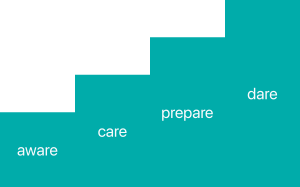
We ended up creating the staircase model, which integrates well with the five toolsets. It helps trained coaches know when to use each of the techniques they have learnt.
Our coach training path
Our conceptual framework has made it possible for us to develop what I think of as a next-generation coach training path. All our courses rest on the solid foundations of our conceptual framework and we use online learning and experiential education practises to make it easy for people to build the skills and understanding of an effective, impactful coach.
I believe that we have found a much needed new way to look at coaching. By focusing on the mechanism of coaching, we escape all the well-meaning waffle that people like me find so frustrating.
Perhaps our conceptual framework will even help the world of coaching leave its pre-paradigm era behind.
References
- Thomas Kuhn, The Structure of Scientific Revolutions, Chicago: University Of Chicago Press, 1970, p. 17 (first published 1962).
- Ibid., p. 18.
- Aristotle used simple words to describe motion: faster, slower, pushing, pulling, pushing together, pushing apart, carrying, rotating, combining and separating [Aristotle, Physics, VI:2 (a25 – a33) and VII:2 (a15 – b7)].



Excellent Article, Excellent Blog , Excellent Site ✅✅✅
Thanks. I’m glad you enjoyed the article.